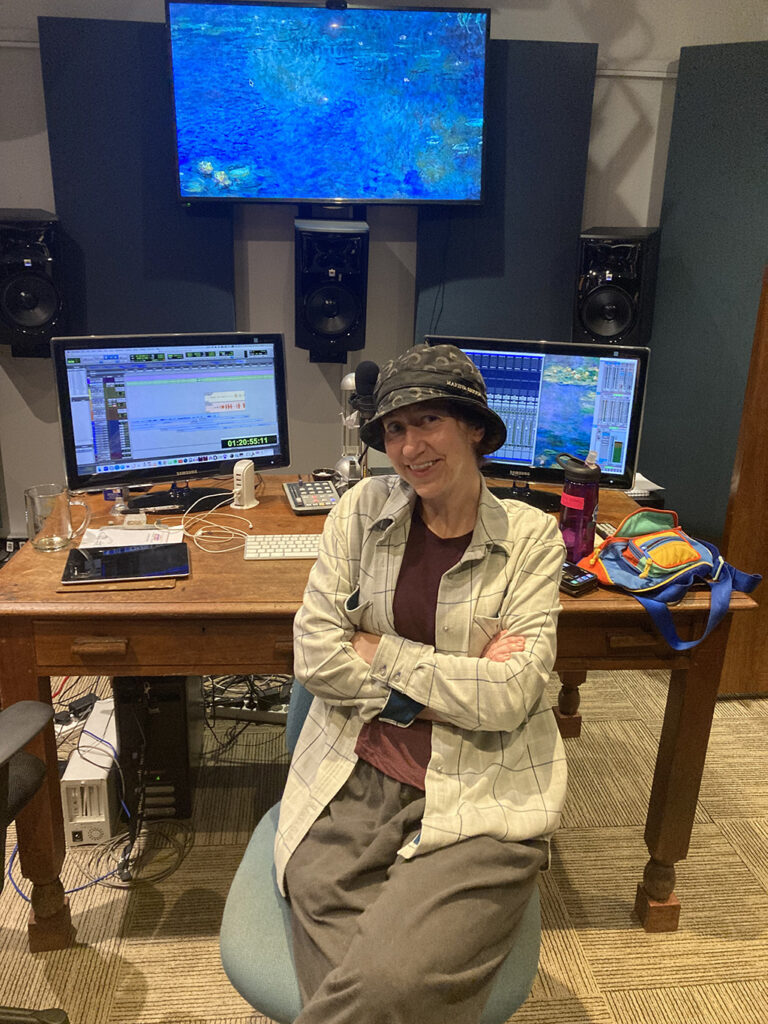
One of the many audio post-production services Milestone Studios provides is Automatic Dialogue Replacement, often referred to as ADR. This is a process whereby actors replace lines that were recorded on set with those recorded in a soundproof studio, assisted by a professional sound engineer. There are several reasons why this may need to happen. Sometimes, there may have been problems with the sound on set — if the scene was filmed in a noisy environment, then no matter how hard the live sound technician tried, they would not have been able capture a recording of the actor’s lines that is sufficiently clear for use in the final production. At other times, there could be non-technical reasons for needing to replace a line of dialogue with another recorded line: for instance, if the writers have decided to change the script, or if the performance of the line needs to be changed — in other words, if there is a need for the line to be delivered differently (i.e. with different emphasis or a different emotion).
People from the film company, like the Director or Line Producer, will normally attend the recording, sometimes called a dubbing session. Their attendance can either be in person or via a link to a remote studio, if they are in another part of the world to the actor. We use Source-Connect for the highest possible quality connection, which allows us to synchronise the film and the actor’s voice remotely. An actor who is in Cape Town for a film shoot might be called in to sync dialogue for a show that was recorded some months previously. The Director could be in a dubbing studio in Los Angeles and the Line Producer could be in New York, while the actor is with us at Milestone Studios in Cape Town. The great advantage of programmes like Source-Connect is that all the parties involved can hear each other clearly so that the Director or Line Producer can give input in real time and the actor can respond and deliver the required lines.
This sort of dialogue recording or voice-over recording is best done in a specialised audio studio like Milestone. While it’s possible to do it at home or in a less professional setting, there is always the risk that the new lines recorded will be compromised due to outside noise (since many home studios aren’t sufficiently soundproofed) or poor quality equipment. At Milestone, we are sure to use microphones that are the same or similar to the ones used on set, to match the location sound. Most often the location sound recordist will have used a lapel or lavalier microphone plus a rifle microphone. Filmmakers don’t want viewers to realise that a line has been replaced after the fact, so it’s important to get the newly recorded lines to sound as similar to the originals as possible, but cleaner.
Another part of ADR is matching the picture with the audio. Depending on whether or not the actor is in shot while their line is being spoken, they may need to match their new line with their lips in the video. This is a specific skill that actors have to master, and learn with experience, but there are certain techniques that sound engineers can employ to make this tricky task a little easier for actors in the booth. For example, we prepare sessions ahead of time by looking at the script and finding out the exact time that the line starts, and inserting three beeps just before, as a cue for the actor so they know when to start speaking.
Recording ADR is by definition a second attempt at getting a line right, so it’s best to avoid the need for a third (or fourth!) attempt by choosing a reputable studio that will do the job properly. The film industry is usually high pressure and high budget, and actors often have very limited time available, so efficiency is key. At Milestone Studios, we pride ourselves on providing our ADR clients and actors with smooth recording experiences. We are also SAG-AFTRA approved for COVID compliance.